How to Choose Centerpiece Heights for Conversation
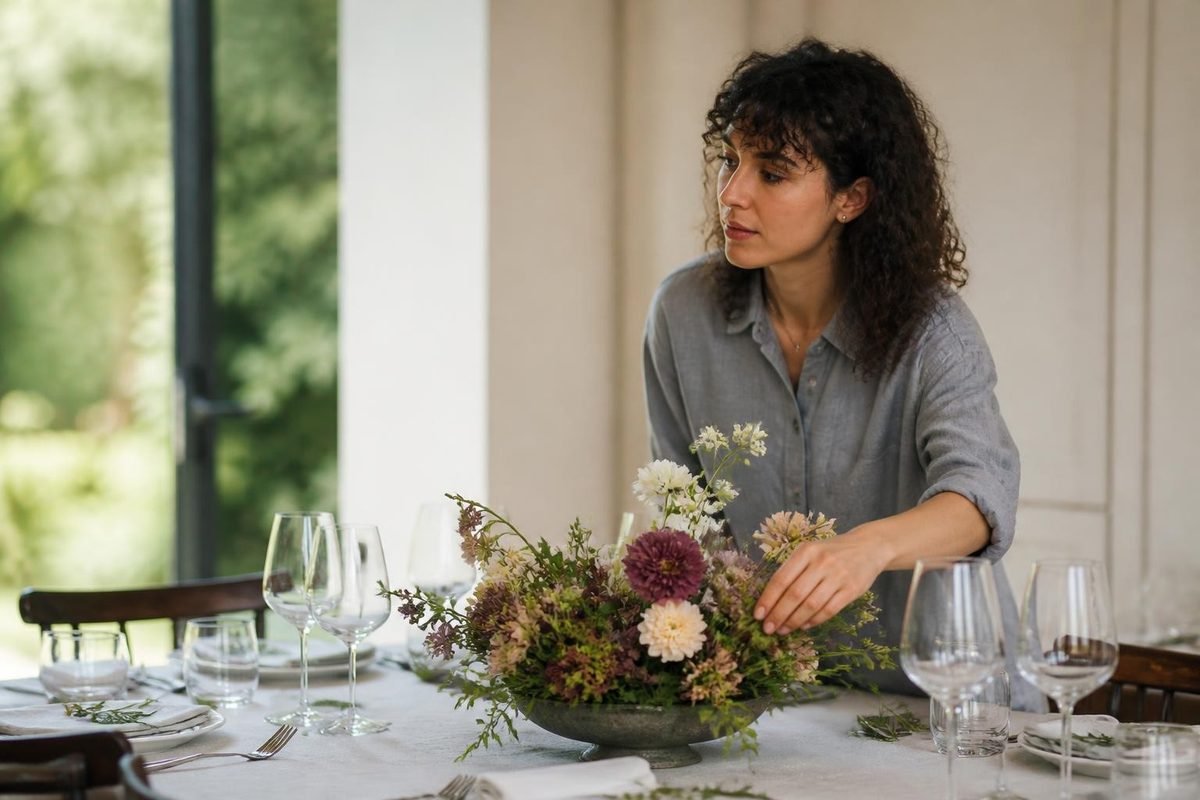
Choose a centerpiece that lets seated guests see one another across the table without leaning to either side. Keep a low arrangement below seated eye level, or place the flowers high enough above it that the space between guests stays open.
Start with the view from a chair
The useful measurement is not the height of the room or the vase by itself. It is the height of the finished arrangement above the tabletop, including every flower, leaf and branch that might cross a guest's view.
For a low centerpiece, start with a total height of about 12 inches or less. This is a practical starting point, not a guarantee. Chair heights, table heights and the people seated at them vary, so check the arrangement from the actual seats.
Sit down and look across the table. You should be able to see the face of someone opposite you without looking through a cluster of stems or blooms. Check diagonal views too, since dinner conversation does not always happen directly across the table.
Pay attention to width as well as height. A broad arrangement can block views along the table even if its tallest flowers sit below eye level. It also needs to leave room for plates, glasses and serving dishes.
Decide between low and tall flowers
Low arrangements are straightforward for most dinner tables. A shallow bowl or short vase holds flowers close to the surface and makes it easier to keep the whole arrangement below the sightline. Trim any stems that rise noticeably above the rest, then check the view again.
Tall arrangements can work if the flowers sit above seated eye level and the support does not obstruct the space below them. A narrow, clear vase or a slender stand can leave more of that space open than a wide, opaque container.
Look through the support from each side before adding flowers. Even a clear vase can become visually dense when it is packed with stems. Leaves, ribbons and decorations around the middle can also interrupt the view.
Tall flowers need a stable base. Place the arrangement where it cannot be easily knocked by a passing dish or an elbow, and make sure it does not hang into the space guests need for eating.
Test the arrangement before dinner
- Set the table with the chairs and place settings you plan to use. Include serving dishes if they will stay on the table.
- Place the finished centerpiece in position and measure its full height from the tabletop to the highest flower or leaf.
- Sit in several chairs and check the views opposite and diagonally across the table. Ask another person to sit opposite you if one is available.
- Lower or move any stems that cross a face. If the container itself blocks the view, replace it with a shorter or narrower one.
- Check the remaining space for glasses, food and hands. Adjust the position without pushing the flowers into someone else's place setting.
A final seated check matters more than a measurement alone. The best height is the one that keeps the flowers present while leaving guests free to see and speak to one another.
Read next: here
Ends · STEMJOURNAL95